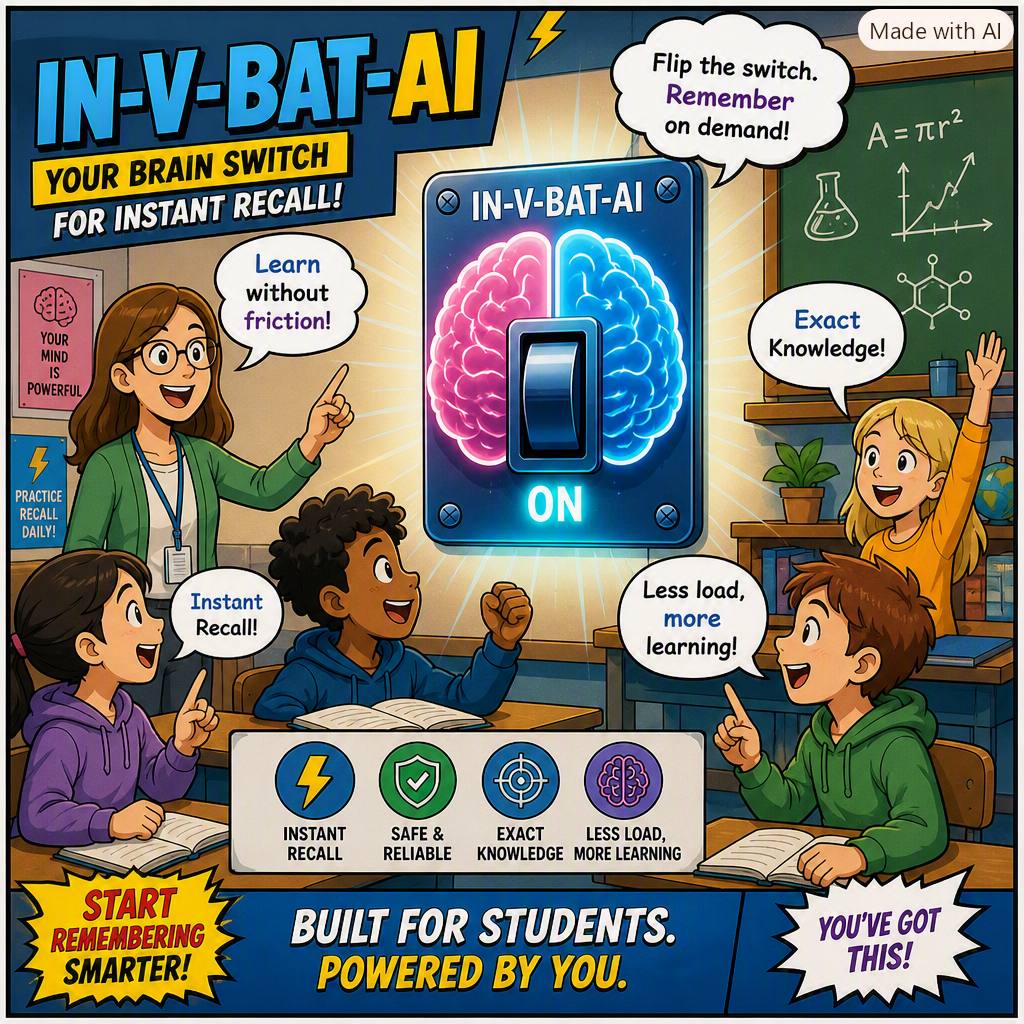
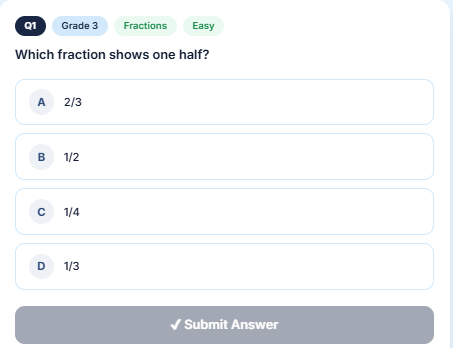
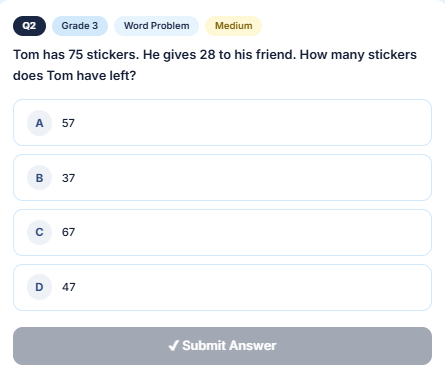
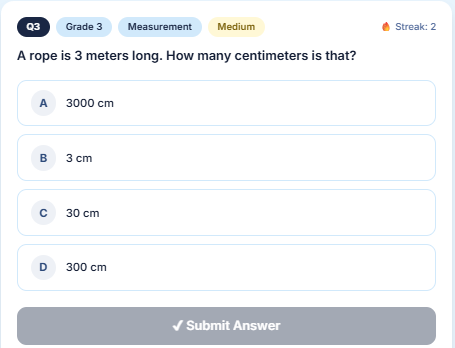
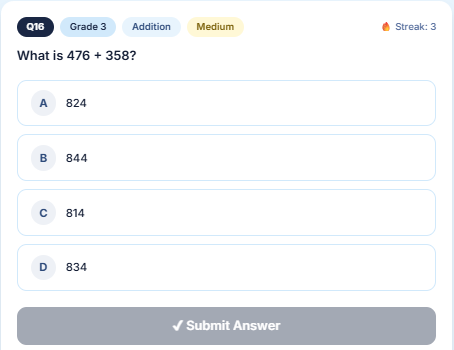
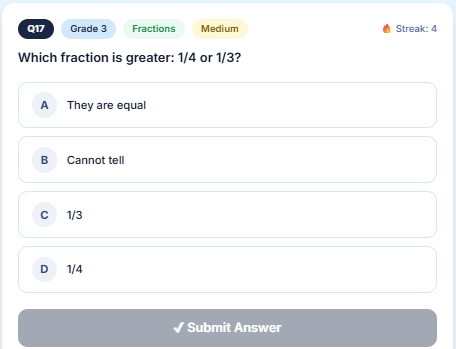
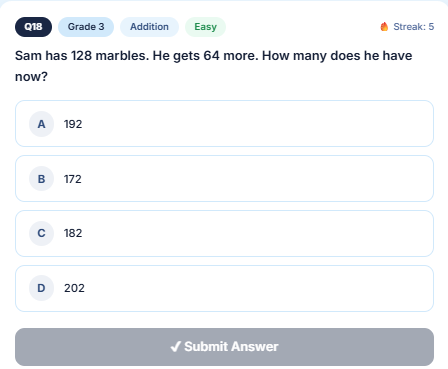
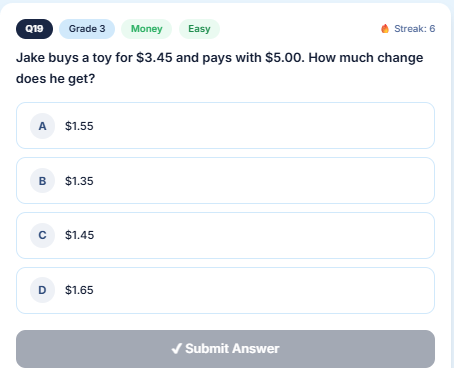
IN-V-BAT-AI is a valuable classroom tool that enhances both teaching and learning experiences. Here are some ways it can be utilized:
☑️ Personalized Learning : By storing and retrieving knowledge in the cloud, students can access tailored resources and revisit
concepts they struggle with, ensuring a more individualized learning journey.
☑️ Memory Support : The tool helps students recall information even when stress or distractions hinder their memory, making it
easier to retain and apply knowledge during homework assignments or projects.
☑️ Bridging Learning Gaps : It addresses learning loss by providing consistent access to educational materials, ensuring that
students who miss lessons can catch up effectively.
☑️ Teacher Assistance : Educators can use the tool to provide targeted interventions to support learning.
☑️ Stress Reduction : By alleviating the pressure of memorization, students can focus on understanding and applying concepts,
fostering a deeper engagement with the material.
Built from Bloom's Taxonomy + Depth of Knowledge + Modern AI Capabilities 1. Remembering → AI‑Supported Instant Recall Previous human task: Retrieve facts, terms, formulas, procedures from long‑term memory. AI Upgrade: AI provides perfect retrieval; students focus on verifying and applying, not memorizing. Students no longer lose learning to forgetting; they can focus on higher‑order thinking. IN‑V‑BAT‑AI acts as a “memory extension,” ensuring up to 98% retention with no hallucination. (2% loss is potentially due to power outage.) Updated rigor expectation: Students must know how to access and use AI tools, verify, and apply retrieved knowledge — not just memorize it. 2. Understanding → Human Interpretation + AI Clarification Previous human task: Explain, summarize, classify, infer, compare, interpret. AI Upgrade: AI can paraphrase, illustrate, model, and generate examples instantly. Students shift from creating explanations to evaluating, refining, and validating AI‑generated explanations. This requires mastery of fundamental first principles of science and mathematics. Updated rigor expectation: Students demonstrate understanding by improving, critiquing, or contextualizing AI‑generated interpretations. 3. Applying → Human Judgment + AI Execution Previous human task: Use procedures, solve problems, apply rules, perform calculations. AI Upgrade: AI performs calculations, conversions, multi‑step procedures, and algorithmic tasks flawlessly. Students focus on selecting the right method, checking AI outputs, and adapting solutions to new contexts. Updated rigor expectation: Students must justify why a procedure is appropriate and verify AI‑generated solutions for accuracy and relevance. 4. Analyzing → Human Insight + AI Synthesis Previous human task: Break down ideas, find relationships, identify patterns, draw conclusions. AI Upgrade: AI can analyze large datasets, compare sources, detect patterns, and surface hidden relationships. Students evaluate the quality, bias, and logic of AI‑generated analyses. Updated rigor expectation: Students analyze by critiquing AI reasoning, identifying missing context, and integrating human insight with machine output. 5. Evaluating → Human Judgment + AI Evidence Previous human task: Judge, critique, justify, prioritize, defend decisions. AI Upgrade: AI can gather evidence, test hypotheses, and generate arguments. Students must determine validity, ethical implications, and real‑world impact. Updated rigor expectation: Students evaluate by weighing AI‑generated evidence against human values, constraints, and lived experience. 6. Creating → Human Imagination + AI Generative Power Previous human task: Design, invent, hypothesize, construct, produce new ideas. AI Upgrade: AI can generate novel designs, models, scenarios, and solutions beyond human imagination. Students become directors of creativity — guiding, refining, and integrating AI outputs. Updated rigor expectation: Students create by orchestrating human imagination with AI generative capabilities to produce original, purposeful work. Why It Matters for Schools (and for IN‑V‑BAT‑AI) “Generative AI has now surpassed many capabilities of the human brain. Under the guidance of the human brain, AI can integrate multiple databases to generate novel combinations never before processed by the human mind.” -Sam Ortega, founder of IN-V-BAT-AI This means cognitive rigor must evolve from the old model to the new model. Cognitive rigor shifts from: “Can the student do it alone?” to “Can the student think with AI — critically, ethically, creatively, strategically?” IN‑V‑BAT‑AI supports this by eliminating forgetting, accelerating retrieval, and freeing bandwidth for higher‑order thinking.
📚 While most EdTech platforms focus on delivering content or automating classrooms, IN-V-BAT-AI solves a deeper problem: forgetting.
✨ Unlike adaptive learning systems that personalize what you learn, IN-V-BAT-AI personalizes what you remember. With over 504 pieces of instantly retrievable knowledge, it’s your cloud-based memory assistant—built for exam prep, lifelong learning, and stress-free recall.
"🧠 Forget less. Learn more. Remember on demand."
That's the IN-V-BAT-AI promise.
Understanding the difference between collaboration and automation

Augmented Intelligence is like a co-pilot: it accelerates problem-solving through trusted automation and decision-making, helping you recall, analyze, and decide — but it never flies solo.
Artificial Intelligence is more like an autopilot: designed to take over the controls entirely, often without asking.
From autopilot to co-pilot, IN-V-BAT-AI unites Trusted Automation Intelligence with Trusted Recall Intelligence — empowering teachers and learners to focus on creativity, understanding, and never forget what matters.

Note: This is not real data — it is synthetic data generated using Co-Pilot to compare and contrast IN-V-BAT-AI with leading EdTech platforms.


For Teachers: Imagine having a tool that helps you see exactly where your students struggle to recall key concepts. IN‑V‑BAT‑AI acts like a memory assistant, surfacing the lessons, formulas, and ideas that students most often forget. This means your assessments can be sharper, more targeted, and more meaningful. Instead of testing what students already know, you can measure what they need most support with. By integrating IN‑V‑BAT‑AI into your test preparation and assessment cycle, you gain actionable insights that guide instruction, reduce learning gaps, and improve overall outcomes.
For Students: Tests don’t have to feel overwhelming. IN‑V‑BAT‑AI helps you recall important knowledge on demand, so you walk into assessments with confidence. Whether it’s formulas, definitions, or concepts you’ve struggled to remember, the system reinforces them until they stick. This means less stress, more focus on applying what you’ve learned, and better performance when it matters most. With IN‑V‑BAT‑AI, assessments become less about memorization and more about showing what you truly understand.
Why It Matters: Assessments are useful because they make students' memory recall and thinking visible to themselves, highlighting what they can remember, solve, compute, and reason with, and providing feedback that guides both teaching and learning. IN‑V‑BAT‑AI strengthens this process by ensuring students remember what matters, teachers measure what counts, and both sides act on reliable recall data. It transforms tests from a source of anxiety into a tool for growth.
IN-V-BAT-AI can play a powerful role in test assessment by focusing on its core strength: memory recall and personalized knowledge retrieval. Students can quickly access the 504+ stored lessons, formulas, or concepts when preparing for tests, reducing stress and improving retention. By tailoring recall to each learner’s weak areas, IN-V-BAT-AI ensures assessments target the right gaps. If a student misses lessons or struggles with distractions, the system helps them catch up before assessments. Teachers can use IN-V-BAT-AI to design targeted quizzes or practice tests based on what students most often forget, making assessments more meaningful. In short, IN-V-BAT-AI strengthens test assessment by making sure students remember what matters, teachers measure what counts, and both sides act on reliable recall data.
| Year | Top 10 countries | Pages / Visitors |
| 12/31/ 2023 | 1. USA 2. Great Britain 3. Germany 4. Canada 5. Iran 6. Netherlands 7. India 8. China 9. Australia 10. Philippines | 127,256 Pages / 27,541 Unique Visitors |
| 12/31/ 2024 | 1. USA 2. China 3. Canada 4. Poland 5. India 6. Philippines 7. Great Britain 8. Australia 9. Indonesia 10. Russia | 164,130 Pages / 40,724 Unique Visitors |
| 12/31/ 2025 | 1. USA 2. Japan 3. China 4. Brazil 5. India 6. Vietnam 7. Australia 8. Canada 9. Argentina 10. Poland | 241,573 Pages / 87,053 Unique Visitors |
| Daily Site Visitor Ranking 6/05/2026 | 1. USA 2. Vietnam 3. Japan 4. India 5. China 6. Brazil 7. Argentina 8. Russia 9. Indonesia 10. Mexico | Year to Date 201,355 Pageviews 123,981 Unique Visitors |
In 2020 approximately between 2.3 and 2.5 million schools globally, according to the latest available data from government and education ministry reports. Using UNESCO 1.3 billion students worldwide divided by about 550 students per school. The estimated school worldwide is about 2.3 million